Showing posts with label Audio. Show all posts

Saturday, October 9, 2021

"Jingle Bells" - Part 57 - Organ-ic!

Remaining in the 1960s with "Jingle Bells," we have versions by three popular organists!


First up is Jimmy McGriff with this track from his 1963 "Christmas with McGriff" album on Sue Records:


Very cool and definitely a memorable album cover!

The title track was edited for a two-sided single:


Jimmy had first attracted national attention with his great version of the Ray Charles tune "I've Got a Woman," released on Sue Records in 1962:


Good stuff!


A little more pop-oriented is this 1965 version of "Jingle Bells" by Earl Grant from his "Winter Wonderland" on Decca Records:


Very solid! What's that beat?

The flipside features Earl crooning "Silver Bells":


That single (as well as the album) was popular for a long time.

As evidenced, in addition to his keyboard prowess, Earl Grant was a talented vocalist of the Nat King Cole school. This really shows up in his big 1958 hit single "The End" on Decca Records:


A great track that belongs on your 1958 playlist!


Another LP from 1965 was Eddie Dunstedter's "Christmas Candy" on Capitol Records, which featuted this Bossa Nova take:


That's really fun!

Here's the title track from the album:


Eddie Dunstedter recorded a few Christmas albums and they still sound great today!
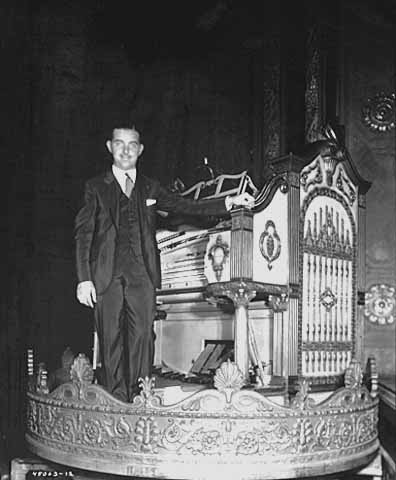

Eddie had a long career and was a professional long before Jimmy McGriff and Earl Grant were even born!

We had heard Eddie backing singer Kenny Baker on a couple of Christmas Carols from 1938 here, so let's hear him do the same for Frances Langford, also from 1938 on Decca Records:


Still sounds good!

So, organists with different styles but all masters of the instrument!

Friday, October 1, 2021

"Jingle Bells" - Part 53 - Other Honky Tonk!


We were just listening to some honky tonk piano versions of "Jingle Bells," but if you were to play word association with me and said "honky tonk," I'd say "Bill Doggett!"

Organist Bill Doggett had a big hi with the song "Honky Tonk" in 1956, but for our immediate purpose, we turn to his 1958 album on King Records "12 Songs of Christmas" for his rendition of "Jingle Bells":


That's pretty cool!

Bill Doggett had recorded an earlier holiday single on King in 1954. Here are both sides of that:


Also cool!

Coolest of all, though, is the aforementioned "Honky Tonk" from 1956. Here are Part 1 and Part 2:


Still sounds great!

Wednesday, September 29, 2021

"Jingle Bells" - Part 52 - Honky Tonk!


We turn from the then-current instrumental "Jingle Bells" of the Ventures to a few instrumental versions in the old school Honky Tonk style of piano!

First up is Del Wood, with this single on Tennessee Records from 1954:


And here's the flipside, which for a change is a  version of Gene Autry's "Here Comes Santa Claus":


Very snappy piano stylings!


What is not evident from her name is that Del Wood was a woman. Her stage name is a very clever takeoff on her full married name of Polly Adelaide Hendricks Hazelwood!

I'm under the impression that her gender was not originally known to record buyers until her 1951 recording of "Down Yonder" became a massive hit:


She identified as a country music artist and continued to record with releases aimed toward that market for a long time.


Another long-time proponent of the Honky Tonk style was "Crazy Otto" (German pianist Fritz Schulz-Reichel) who included "Jingle Bells" in this Christmas medley on Decca Records from 1960:


Crazy Otto was big on medleys and his name actually first became known to American audiences when pianist Johnny Maddox had a huge hit in 1955 with a medley of tunes called "The Crazy Otto":


I guess it was confusing that Crazy Otto was a person and not just a song!


We next check in with Big Tiny Little (real name Dudley Little, Jr.) with his own Christmas medley on Coral Records in 1961:


I like how he weaves "Jingle Bells" in and out, but I notice that "The First Noël" in included, but not listed on the label.

So, some enjoyable recordings, but remember - it's Honky Tonk, not Ragtime!

Monday, September 27, 2021

"Jingle Bells" - Part 51 - Venturing Forth!


We inch up to 1965 for this version of "Jingle Bells" from "The Venture's Christmas Album" on Dolton Records:


We had listened to the cut "Scrooge" from this album here and I mentioned at the time that most of the songs on the album were arranged in the style of other pop hits.

If you listen to the familiar riff used in "Jingle Bells" you realize it's from "What'd I Say," the brilliant Ray Charles" hit from 1959:


"The Ventures' Christmas Album" offers the guessing game of what other songs are referenced in addition to enjoying the music itself!

The Ventures hit the big time with their 1960 hit "Walk Don't Run":


They used that as the template for their version of "Sleigh Ride" on the Christmas album:


That to me is particularly awesome and a 1960s Christmas essential!

The Ventures were/are hugely popular in Japan, as their instrumentals needed no translation:


The then-current lineup of the Ventures released a second Christmas album in 2002 and it included a different arrangement of "Jingle Bells":


That sounds good, but the original 1965 album can't be beat!

Saturday, September 25, 2021

"Jingle Bells" - Part 50 - Going to the Dogs!


For our fiftieth "Jingle Bells" post, we turn to perhaps the most famous version of all: the Singing Dogs!

The original issue of the recording was part of a medley issued on the B-side of a 1955 record on RCA Victor:


Interesting to hear "Jingle Bells" in its original context!

The A-side, "Oh! Susanna" was a hit and actually hit number 22 on the "Billboard" singles chart!

Here's that record:


The story goes that Danish ornithologist Carl Weismann would record bird calls and sometimes he'd inadvertently get dogs barking on his recordings. He spliced those together to make it seem like they were singing and teamed up with record producer Don Charles and the rest was history!


Since that record was successful a follow-up was definitely in order, so another single was released in 1956. Here are both sides of that one:


Pretty fun!

Now, ordinarily that would be that, but "Jingle Bells" took on a life of its own, so in 1971, RCA Victor released a longer version of "Jingle Bells" without the circus sound effects:


And it remains a holiday staple!

You have to dig the old school nature of actual dog barks being spliced together back in the day before anyone could do anything with a computer!

Thursday, September 23, 2021

"Jingle Bells" - Part 49 - A Little More Ozzie!


We time-hop back to 1946 for this version of "Jingle Bells" recorded under the title of "Jingling the Bells" by pianist Frank Signorelli's Quintet on Davis Records:


That's a pretty snappy Dixieland-ish version, not surprising as Frank recorded in the traditional style with his own groups as well as others such as the Original Memphis Five and the Original Dixieland Jazz Band often with trumpeter Phil Napoleon, who plays on "Jingling the Bells."

The Original Memphis Five including Phil Napoleon on trumpet and Frank Signorelli on piano.


I largely think of Frank Signorelli as a composer first, as he collaborated on several songs, including a couple of standards.


His most famous song was "Stairway to the Stars," very popular in 1939 and in the following years.

Here's Glenn Miller's hit recording from 1939 featuring Ray Eberle on the vocal:


And here's another 1939 recording, this one by the late Chick Webb's band featuring star vocalist Ella Fitzgerald:


A couple of solid records, each showing off some of the strengths of the two bands.


The melody for "Stairway to the Stars" started as part of a larger piece composed by Frank Signorelli and his frequent collaborator Matty Malneck title "Park Avenue Fantasy." Frank (on piano) and Matty (on violin) were members of Paul Whiteman's band at the time and Whiteman recorded the number on a 12-inch 78 rpm record for Victor in 1936:


Paul Whiteman's band recorded a lot of good stuff!

The melody became "Stairway to the Stars" when ace lyricist Mitchell Parish added the words. 


Parish had earlier added lyrics to another Signorelli composition to come up with the song "A Blues Serenade," another standard perhaps best-known as the theme song for Henry King's orchestra, who cut this nice version for Decca Records in 1936:


I always find it interesting when the title of a song doesn't appear in the lyrics, as in this case. I wonder why it wasn't titled "Serenade in Blue," as the Mack Gordon/Harry Warren song by that name hadn't been written yet!


We continue back to 1932 for another melody by Frank Signorelli and Matty Malneck, this time with lyrics by Gus Kahn, entitled "I'll Never Be the Same," recorded once again by Paul Whiteman, with a vocal by the great Mildred Bailey:


Another great song.

So, now we go back a couple more years to 1930 for the Signorelli/Malneck composition "And The Your Lips Met Mine," this time with lyrics by... Ozzie Nelson!


This was very early in Ozzie's career - he hadn't even met Harriet yet - but he had a recording contract with Brunswick Records and recorded the song for them:


A nice sounding group!

So, an entertaining swath of music history courtesy of Frank Signorelli!

Tuesday, September 21, 2021

"Jingle Bells" - Part 48 - Full Nelson!


We left "Jingle Bells" in the capable hands of Ricky Nelson and now we take a look at an episode of his family's TV show that incorporates not on "Jingle Bells" but also "A Christmas Carol!"

This is the 1964 presentation of the 1956 Christmas episode (it makes sense once you watch!):


This one includes the commercials, but they quality isn't as sharp:


Either way, I think that's good retro fun!

The version of "Jingle Bells" that the carolers sing is very well performed. Some work went into that!


I like how Ricky (as Marley's Ghost) keeps trying to feed Ozzie his lines and it's fun to see the snippet of Ozzie acting in the play.

It is funny that the full title of this series is "The Adventures of Ozzie and Harriet" as they don't really have adventures!

The "conflict" of this episode is whether Ozzie can manage to play Santa, act as Scrooge and sing carols on a tight Christmas Eve schedule. If that were only the extent of all of our troubles!

If mentioned at all these days, I think this show is dismissed as a too wholesome artifact of a bygone era. But I enjoy it and think it's way more entertaining than people these days give it credit for. 


To keep in the Ozzie and Harriet Christmas spirit, let's listen to the December 19, 1948 episode of their radio series:


Good fun from before the show moved to the new medium of television!


And for even more, here's a 1937 seasonal record by Ozzie's band with Harriet singing the vocal: 


Harriet introduced that tune in the film "Life of the Party" during her 1930s stint as a movie actress:


So, a little bit of everything from the Nelsons!


Friday, September 17, 2021

"Jingle Bells" - Part 46 - Alviiinnnn!


We move from Disney's All-Mouse Chorus to another group of singing varmints - The Chipmunks!

Here's their take on "Jingle Bells" from their 1962 album "Christmas with the Chipmunks" on Liberty Records:


That's actually a fairly straightforward rendition of the song, which is interesting in that they could have done whatever they wanted with it, since it's a public domain song and there wouldn't be any pesky song publishers complaining!

The "Christmas with the Chipmunks" album came about to follow up on the success of the trio's debut single, the Christmas-themed "The Chipmunk Song."

Note the early "realistic" chipmunk designs!

That particular record was issued in 1958, a year after Disney's All-Mouse Chorus, but creator Ross Bagdasarian (stage name David Seville) developed a distinct personality for each chipmunk, giving the record a stronger hook.

Here's that record:

I think that holds up very well and remains a Christmas essential! And, wow, did that lead to a whole Chipmunk industry!

Gotta love how the back of the EP sleeve shows the back of the witch doctor!

Of course, Seville/Bagdasarian had used the sped-up voice trick earlier in 1958 on his smash hit "Witch Doctor." And I love novelty records, so let's listen to that:


The other element that went into the typical Chipmunks song is the instrumental backing, which has a distinct sound, such as found on "Armen's Theme," the 1956 hit and first "The Music of  David Seville" release:


I think that's a good sound and you can see how that informed the instrumental backing track for "The Chipmunk Song!"


Teen idol Bobby Vee cut a vocal version of "Armen's Theme" in 1963 under the title "Yesterday and You":


I think it's a blast how the record starts like "Armen's Theme" then builds into a full-blown big band arrangement! Bobby Vee handles the vocal quite well!

Liberty Records had it going on!

Wednesday, September 15, 2021

"Jingle Bells" - Part 45 - Disney Novelties!


Hanging around the late 1950s with "Jingle Bells," we come across a couple of novelty versions issued by the relatively new Disneyland Records.


First up is this 1957 recording by the All Mouse Symphony and Chorus as conducted by Ludwig Mousensky:


That's cute with some good effects, and it precedes David Seville and the Chipmunks by a year, but didn't have a tremendous impact on the marketplace.


The 45 EP "Walt Disney's Christmas Concert" also features the All Mouse Symphony with a knockout instrumental version of "Winter Wonderland":


Ludwig Mousensky was fortunate to have the extremely talented arranger Tutti Camarata in his corner!


Camarata and the gang had an even wackier "Jingle Bells" takeoff the following year with this cut by the Witches Three from the "A Christmas Adventure in Disneyland" album:


That is fascinating, isn't it!

That particular recording features the multi-talented vocalist Gloria Wood, who did a lot of work for Disney as well as dubbing for movies and singing commercial jingles and everything else!


To show her vocal versatility, here's a record she cut for Capitol  Records in 1953 with trumpet star Pete Candoli:


That's an odd one to be sure, but fun! The bellboy in question is probably not Walter Tetley!

I associate Gloria Wood mostly with her stint with the Kay Kyser band in the late 1940s, with vocals on such records as "Managua Nicaragua" and "Woody Woodpecker" and this big hit:


She was very talented!

No surprise that Disneyland Records had some imaginative stuff!

Saturday, September 11, 2021

"Jingle Bells" - Part 43 - One for Each Sun!


We jump back around a bit to listen to three different versions of "Jingle Bells" (all recorded for RCA Victor) by the popular instrumental group the Three Suns!

First is this version from 1949 from the "Your Christmas Favorites" album:

That's the original sound of the group, with basically just Al Nevins on guitar, his brother Morty Nevins on accordion and their cousin Artie Dunn on electric organ (Artie also sang on some numbers).

They cut another holiday album in 1955, this one titled "The Sounds of Christmas," with a totally different arrangement of "Jingle Bells":

This strays from the group's original sound as it features "string orchestra" accompaniment. What's intriguing is that the orchestra is led by Marty Gold, our fiend from the Korn Kobblers!

We jump ahead a few more years to 1959 with another album, this with the catchy title of "A Ding Dong Dandy Christmas" and another very different arrangement of the song in question:

That's the sound that modern listeners want to hear from the Three Suns, the space-age pop with early stereo effects.

By this point Al Nevins was doing a lot of production work and most likely wasn't responsible for the extremely 1959-sounding guitar work! Who knows, maybe they were all ringers by then!

It's interesting to see the evolution in style over the ten years and three versions of "Jingle Bells!"

Before we go, let's listen to the Three Suns' theme song "Twilight Time," as originally recorded in 1944 for the independent Hit label:

Everyone knows the later vocal version by the Platters from 1958 - and that's a great record to be sure, but I really like the original!

Thursday, September 9, 2021

"Jingle Bells" Part 42 - Bobby & Chubby!


We left off with some twistin' versions of "Jingle Bells" and we don't stray far from that field with this team-up of popular recording stars Bobby Rydell and Chubby Checker!

We start with their 1961 hit remake of  Bobby Helm's 1957 "Jingle Bell Rock" on the Cameo label:


That's a fun version, perfect for the 1961 teen market!

What draws our interest in the "Jingle Bells" field is the flipside:


That's a wacky thing, isn't it? I think it's fun but I don't need to listen to it too often.

It definitely shows off the talent of Bobby and Chubby, however.


Bobby in particular does a spot-on Bobby Darin, with Darin's recent hit version of "Won't You Come Home Bill Bailey" as the template. I think Bobby R was/is really talented and could have handled a wider variety of material, but his teen-oriented records were so popular, why fix what ain't broke?

Bobby Rydell was the big star for Cameo Records as Chubby Checker was for Parkway Records and since Parkway was a subsidiary of Cameo, why not team them up?

The guys had another team up in 1962, with this amusing song:


Bobby even throws in a Jerry Lewis imitation!


The inspiration for the "Jingle Bells Imitations" track would be Chubby's 1959 recording "The Class," which was his first hit:


Of note is that the Chipmunks' name is misspelled on the label and the label doesn't mention the take-off of Cozy Cole's "Topsy II" from 1958.

Hey, I love "Topsy II" so let's hear it:


Awesome! Best drums ever?

Oh, and Chubby got top billing on some issues of the record we started off with:


Just in case you were wondering!

Tuesday, September 7, 2021

Jingle Bells - Part 41 - With a Twist!


While we're in the 1960s, we can't ignore the biggest dance craze of  that decade - and one of the biggest ever - The Twist!

It seemed like every song was getting a Twist arrangement back then, so why not "Jingle Bells" as well?

We start off with Santo & Johnny with this recording on Canadian-American Records from 1960:


This was actually a pretty good seller for the duo, who were still riding high from their smash hit "Sleep Walk" of the year before.

"Sleep Walk" is one of my favorite records ever, so Santo & Johnny (brothers with the last name Farina) can do no wrong with me!

Here's a fun clip of the boys playing "Sleep Walk" on the Perry Como TV show in 1959:


That is a blast!

The name recognition factor drops off a cliff as we check out some other "Jingle Bells" Twist variations, starting with Johnny Mendell on Jamie Records 1n 1961:


That's a fun record! I get a "Jingle Bells" meets "Sweet Little Sixteen" (Chucky Berry's 1958 hit) vibe and I feel it anticipates "Surfin' USA," which the Beach Boys recorded in 1963. Did Brian Wilson possible hear this record?

Anyway, the Jamie label was best-known as the home of Twangy Guitar superstar Duane Eddy, who recorded extensively for the label, but no Christmas songs.

Even less-known than Johnny Mandell are the Versatiles, who offer this surf-ish version from 1961:


Sorry for the bad sound, but it's a fun record, clocking in at over three minutes, quite long for that sort of thing!

Then there's the Brazian instrumental group the Jet Black's with this cut from (maybe) 1964:


Apparently the Jet Black's got their name from the song "Jet Black" by the Shadows (originally recorded when they were still known as the Drifters). That's dedication!

Let's give that one a listen:


So, some interesting twists on the theme!

Sunday, September 5, 2021

"Jingle Bells" - Part 40 - Great Scott!

We go from Pat Boone's "Jingle Bells" to a real rocking version by singer/songwriter/guitarist Jack Scott!

Here's his "Jingle Bells Slide" on Groove Records from 1963:


I think that's just terrific! 

The flipside is also awesome:


Groove was a subsidiary of RCA Victor, hence RCA stalwart Chet Atkins as producer and the high sound quality.

1963 seems very late for such a great rockabilly record, but  it makes me retroactively happy that Jack Scott and Chet Atkins saw fit to cut that record!

Here's another great record they made for Groove (in 1964):


That's awesome stuff, but the popular music landscape was changing and with the Beatles about to take over, the market for such things just wasn't there anymore.

Jack Scott gets my vote for the most underrated "oldies" artist ever! He had several popular records, but never quite seemed to break through to major stardom, although rockabilly buffs know him well!


Let's give a listen to his two-sided breakthrough record from 1958:


That's the stuff! 

Popular (For Some Reason) Posts: