For this week’s Word Association Wednesday spin‑off from “It Don’t Mean a Thing (If It Ain’t Got That Swing),” my wheels were turning around the word thing. I wanted something from roughly the same moment in time, and Ray Noble’s Love Is the Sweetest Thing popped right into my head.
The Sweetness Begins
Ray is in the white suit and Al is the far left.
Ray recorded the song in England in September 1932 for HMV with vocalist Al Bowlly:
That record came out in 1933 and became a big hit on both sides of the pond, cementing Ray’s reputation as a composer and bandleader.
Fun side note: HMV was especially good at pushing Noble’s catalog internationally - released here on Victor - one of those early examples of a label realizing they had a transatlantic star on their hands and packaging him accordingly.
Bowlly Adds the Verse
The wonderful Al Bowlly also recorded his own version without Ray Noble for British Decca:
Nice to hear the verse!
A Cinematic Sprinkle
The song also made its way into the 1932 British film Say It With Music, where bandleader/vocalist Jack Payne performed it — and he recorded it for the Imperial label as well:
Dig that awesome custom record label.
This Side of the Pond
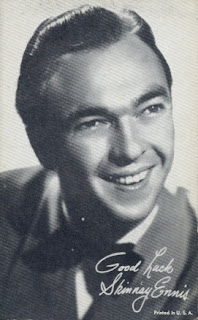
Skinnay Ennis is at the drums.
To close, let’s sneak in an American version. Here’s Hal Kemp’s 1933 Brunswick recording with Skinnay Ennis on the vocal:
I love those Kemp/Ennis sides from the 1930s.
It’s also fun hearing this song bookended by two very different 1930s vocal personalities: Al Bowlly, all velvet warmth and romantic glow, and Skinnay Ennis, the king of the feather‑light, half‑smiling whisper. If Bowlly is a rich dessert, Skinnay is a meringue.
Ninety‑plus years later, you still can’t argue: Love Is the Sweetest Thing.
Sunday’s post had Duke Ellington ringing the rafters with Ring Dem Bells, so for this week’s Word Association Wednesday, we follow the echo straight into the underworld. If Duke rings ’em, somebody’s bound to shout Hell’s Bells! - and that’s our cue to go spelunking through the 78 rpm stacks. We've got five versions, so leave us begin...
1. Art Kassel - The King’s Writer (1932)
We start at the source: Art Kassel, who not only recorded Hell’s Bells but wrote it and used it as the theme song for his "Kassels in the Air"Band. His 1932 Columbia side is a bit raucous for a polite hotel band, but it’s novelty‑adjacent without ever quite tipping into corn, and it sets the tone for everything that follows.
2. Bob Causer (with Dick Robertson) - The Budget‑Label Surprise (1932)
Next, we flip over to the budget bins for Bob Causer and his Cornellians, featuring ubiquitous session vocalist Dick Robertson. Same year, totally different flavor. Robertson actually sings the “It’s certainly hot…” verse - the one Kassel only plays instrumentally - giving us a glimpse of how the tune played when the full lyric was in circulation. Scrappier, cheaper, and absolutely delightful!
3. Hal Kemp - Elegance with a Sly Grin (1932)
From there, we glide into the satin‑smooth world of Hal Kemp. His instrumental take on Brunswick is airy and lightly syncopated - the kind of thing that makes you imagine a hotel ballroom with perfect lighting and a floor that never squeaks. Kemp takes the tune’s novelty edge and files it down to a chic, urbane shimmer, all while keeping the band’s trademark “typewriter” trumpet sound. But in my in mind, I can definitely imagine Skinnay Ennis singing the lyrics!
4. Jimmie Lunceford - Discipline, Fire, and a Ghostly Shimmer (1937)
Then the door swings open and in marches Jimmie Lunceford, whose 1937 Decca recording turns Hell’s Bells into a precision‑swing showpiece. Sy Oliver is the architect here, and his arrangement gives the track its bite: crisp attacks, sly rhythmic kicks, and that buoyant lift only Lunceford’s band could deliver. Adding a delicious layer of atmosphere is pianist Edwin Wilcox, who slips over to the celeste for a few choice moments — a little chiming shimmer that makes the whole thing feel like a haunted music box.
The slower pace of this version actually makes it spookier. It’s been a staple of my Big Band Halloween playlist for years!
5. Clyde McCoy - The 20‑Year Detour (1952)
And then we leap forward two decades to Clyde McCoy, who finally records Hell’s Bells in 1952 — a tune so perfect for his wah‑wah trumpet that you’d swear it had been waiting for him! Why it took him twenty years to wax it is anyone’s guess, but once he does, it’s a wild, swaggering instrumental that feels like the natural endpoint of every version that came before.
Five versions, five angles, one tune that refuses to stay in its lane. From Kassel’s original to Causer’s budget‑label charm, Kemp’s elegance, Lunceford’s fire, and McCoy’s late‑breaking swagger — which one rings your bells?
Bonus Round: Betty Boop turns up the heat (1934)
And for dessert, we hop from the bandstand to the cartoon studio. In Betty Boop’s 1934 short Red Hot Mamma, Betty — voiced by Bonnie Poe — actually sings Hell’s Bells right in the middle of her infernal adventure. It’s exactly what you’d expect from the Fleischer studio: surreal, spicy, and the kind of cross‑pollination that made early ’30s pop culture such a glorious tangle.
Still in 1939, we have what I believe is our first college song from a Broadway show!
The song in question is "Love Never Went to College" from the Rodgers & Hart musical "Too Many Girls."
At this point in time, original cast albums still weren't a thing, but one of the stars of the show, Mary Jane Walsh, recorded a few of the songs for Columbia Records.
So, here's Mary Jane with "Love Never Went to College":
That's really nice. I'm so used to hearing dance band versions of 1930s show tunes that something like that is a pleasant change. (I'll talk more about that in a couple pf minutes!)
But I still love me some dance bands, so here's Paula Kelly singing "Love Never Went to College" with Al Donahue's band on Vocalion Records:
I really like Paula Kelly's singing a lot. Her handful of records with Glenn Miller are great!
Let's hear one more version, this time it's Hal Kemp with The Smoothies on Victor:
A fun version showing how the Kemp band was evolving with the times.
And one more version, this one by Benny Goodman with Louise Tobin on Columbia:
The most popular and enduring song from the show "Too Many Girls" was by far "I Didn't Know What Time It Was," so let's flip over BG's record for his version of that standard, again with Louise Tobin on the vocal:
Sounds great!
Louise Tobin is another underrated vocalist of the era, usually only being mentioned as Harry James's pre-Betty Grable first wife, but she passed away only about a year ago at age 104, so maybe she had the last laugh!
Benny Goodman had recently switched to Columbia label after a monumental run with Victor and the word is that part of the reason is that he felt Victor was favoring newcomer rival clarinetist/bandleader Artie Shaw!
Whatever the case, here's Artie's version of "I Didn't Know What Time It Was" with vocalist Helen Forrest on the Victor subsidiary Bluebird:
More talk is that the tempo is too fast for this number causing Helen to rush through the heartfelt lyrics, and I agree, but I still like it!
Not underrated as a band vocalist and deserving of every plaudit she got, Helen Forrest was always great, but she really hit her stride after her stints with Artie's and Benny Goodman's bands when Harry James's band provided arrangements that better showcased her.
Let's keep things going and hit the movie version of "Too Many Girls" from RKO in 1940!
The movie included "You're Nearer," a Rodgers & Hart song not from the show, which was performed by Frances Langford, who took on Mary Jane Walsh's role from the show.
Here's Frances's recording of "You're Nearer" for Decca:
Talking about tempos, the rare solo vocal star of the era like Frances Langford didn't have to worry about a bandleader keeping a dance tempo!
The film version of "Too Many Girls" casts a very long shadow over pop culture as it was on the set of that movie that Lucille Ball and Desi Arnaz met!
The mind-boggling thing is that if that movie hadn't been made, maybe Lucy and Desi wouldn't have met and "I Love Lucy" may not have happened, which would mean the whole landscape of TV would have changed!
Still in 1935, we run into another college picture from Paramount: "College Scandal" starring Arline Judge!
The sheet music art seems at odds with the film's title and indeed, it's more of a murder mystery than a frothy musical!
It did have a hit song, though, "In the Middle of a Kiss," which was sung by Arline and former "Our Gang"-er Johnny Downs, who seems to be in every college movie of the period!
A popular version was waxed for Brunswick by Hal Kamp's band with Skinnay Ennis once again doing the vocal honors:
Love those Kemp/Ennis sides!
Here's a very lovely version by the wonderful Connee Boswell:
I'm not sure what the Columbia/Brunswick/Lucky business is all about!
And Connee and Skinnay hadn't adopted the snazzier versions of their names yet!
Let's hear one more version, this one's a budget label record from Smith Ballew:
For our next collegiate song, we flip over the Ted Wallace record of "Football Freddy to find "Fraternity Blues" on the other side!
So, let's hear that Columbia recording:
That's "Ted Wallace" (Ed Kirkeby) on the vocal and Jack Purvis back on trumpet!
Another fun version of the song was cut by Hal Kemp's band on Brunswick:
The "vocal refrains" are by usual suspect Skinnay Ennis and Saxie Dowell (later noted as writer of "Three Little Fishies").
Hal Kemp comes back into the picture in a bit...
You probably noticed that an odd drawing of Kay Kyser is on the sheet music for "Fraternity Blues" and that he's listed as the composer.
Funny thing is that I don't think Kay ever recorded the song! This was very early in Kay's career and he was between recording contracts at the time.
Kay had attended UNC and took over the campus band from Hal Kemp when Hal and Skinnay Ennis, et al turned pro. When Kay graduated, he recorded a few sides for Victor that didn't go anywhere, including this ode he co-wrote to another fair co-ed, "Collegiate Fannie":
Vocalist/saxist Sully Mason was with Kay from the start and remained a popular member of the band for many years.
It's interesting to hear Sully singing "Collegiate Fannie" with a Kyser arrangement so different from what we usually think of from the Kollege of Musical Knowledge!
Still in 1928, we have the song "Collegiana" from the hit songwriting team of Dorothy Fields and Jimmy McHugh!
I'm partial to this version by Hal Kemp and his Orchestra with Skinnay Ennis and "vocal effects" on Brunswick Records:
As the label helpfully points out, Hal Kemp started his band at the University of North Carolina!
Hal's UNC Senior yearbook photo!
Vocalist/drummer Skinnay Ennis and pianist arranger John Scott Trotter were among Hal's UNC classmates who made the jump to the big time with him!
It' still the 1920s and there's a quality college-themed song making the rounds. Can Waring's Pennsylvanians be far away?
Well, no, they're right here with their version of "Collegiana" on Victor Records:
It's kind of interesting that the Kemp band's label mentions "vocal effects" but the Waring record has wackier vocal effects courtesy of drummer Poley McClintock!
Hal Kemp and his Orchestra appeared in “Radio City Revels” and although they didn’t play ”Good Night Angel” in the movie, they did cut the song for Victor Records with vocalist Bob Allen:
Curious that Bob’s last name is spelled wrong on the label!
As we're now fully into Daylight Saving Time, I'm reminded of a popular song from 1931 that puts a fun spin on the concept: "(There Ought To Be A) Moonlight Saving Time."
There were a zillion versions of the song when it was published in 1931, but the most popular was by Guy Lombardo and his Royal Canadians on Columbia Records with brother Carmen on the vocal:
It seems like Guy Lombardo's always in the mix when we're listening to early to mid-1930s songs!
Hal Kemp recorded another popular version of the song for Brunswick Records with a vocal by Skinnay Ennis and some snappy trumpet from Jack Purvis:
Such a song really suits the Kemp/Ennis combination, or is it the other way around?
Before leaving 1931, we'll jump over to England for this version by Ambrose and his Orchestra with vocalist Sam Browne on the His Master's Voice label:
That's a great arrangement! I like those Ambrose records a lot!
There were several other contemporary recordings of "Moonlight Saving Time," but I don't think that co-writer Harry Richman recorded it, despite having other records out around that time.
Then I don't think anyone recorded the song at all in the 1940s, but it made something of a comeback in the 1950s.
I like this one from Ray Anthony from 1952 with Marcie Miller and the Skyliners on Capitol:
We'll sneak in one more version, this one from Jackie Gleason's 1956 album "Music for Lovers Only," also on Capitol:
Gorgeous trumpet from Bobby Hackett on that one!
I would definitely vote to replace Daylight Saving Time with Moonlight Saving Time!
Here's another seasonal song, "It's Winter Again," this one from 1932, so it even predates "Winter Wonderland" by a couple of years!
"It's Winter Again" got a handful of recordings when it was published, but unlike "Winter Wonderland," it never got a big revival to transform it into a standard.
But, it's a fun tune, so let's hear it!
First up is Hal Kemp and his Orchestra with vocalist Skinnay (then billed as "Skinny") Ennis on Brunswick Records:
Fun how the arrangement (maybe by John Scott Trotter) sets a seasonal mood. It also may be John Scott Trotter playing the Schroeder-esque "Jingle Bells" notes, as he was the pianist/arranger for the Kemp band from its start as a student band at the University of North Carolina until he left to become Bing Crosby's musical director in 1937.
I like Hal Kemp's records a lot. The style just screams early 1930s to me and the vocals of Skinnay Ennis, another UNC alum, fit perfectly!
You may recall that we heard Skinnay singing the much more famous seasonal song "Let It Snow! Let It Snow! Let It Snow!" on Bob Hope's radio show back in 1945!
Another fun seasonal arrangement is served up by Felix Ferdinando and his Orchestra on the Crown label:
I like that a lot, but I have to admit that I'm not familiar with Felix Ferdinando or vocalist Al Gaudette. Or Crown Records, for that matter!
I think Felix was the brother of Angelo Ferdinando, whom we heard performing "Winter Wonderland" in 1934. I'd say Angelo won the sibling battle over more memorable seasonal song!
Much more well-remembered than either of the Ferdinandos is Isham Jones, who led a very popular band in the late 1920s and early 1930s.
Here's his recording of "It's Winter Again" with Frank Sylvano's vocal on Victor Records:
The arrangement for that record doesn't try to conjure up a seasonal mood like the first two, but it's really good!
I don't know if it's the work of Gordon Jenkins, but he worked as an arranger for the Jones band before embarking on his highly successful career as arranger/conductor/composer.
Intriguingly, Isham Jones also recorded an instrumental version of "When Winter Comes" with the same arrangement:
Apparently this instrumental version was for "theater use." Whatever the case, I think it's awesome to have the two versions!