Showing posts with label 1970s. Show all posts

Monday, June 1, 2026

Monday Side-Session: Caravan Across the Century


Yesterday, we heard several versions of Juan Tizol’s classic Caravan as played by various Duke Ellington groups. For today’s side‑session, we’ll wander a little farther into the dunes and check out how other bands and artists have handled this ever‑mysterious tune.

“Caravan” might be the most recorded number in the entire Ellington band book, and from the very beginning it inspired wildly different interpretations. We’ll do a little decade‑hopping and hit some highlights.

1937: The First Wave of Covers


We start with Bunny Berigan on Victor, recorded just a couple of months after Duke’s own version:

A sharp arrangement by pianist Joe Lippman, and Bunny’s growl trumpet is absolutely convincing. He could do anything he wanted with that horn!


Next up, pianist Edgar Hayes and his band for Decca, also in 1937:

I think I say all the time that Edgar Hayes had an underrated band. I stand by that statement!


And the tune even crossed the Atlantic that same year, where Ambrose recorded it for British Decca:


Three takes from 1937, each bringing its own flavor to the journey.

1946–1949: New Rhythms, New Ideas


This caravan moves fast, so let’s hop off in 1946 to catch Charlie Barnet on the Apollo label:

Charlie could never resist an Ellington‑related number.


Then in 1948, pioneer electric guitarist Les Paul gives the tune a then‑modern facelift on this multitrack gem for Capitol:

Possibly the first guitar‑centric Caravan — but far from the last.


Next, tenor sax star Flip Phillips teams up with Latin legend Machito for this 1949 Mercury side:


I’m sure Juan Tizol approved!

1952–1953: A Curious Case of Influence


We enter the 1950s with a fascinating take by The Esquire Boys for the small Rainbow label in 1952:

A very cool reworking featuring guitarist Danny Cedrone, who would soon play the iconic solo on Bill Haley’s Rock Around the Clock.


Then comes the intrigue: Ralph Marterie’s hit version for Mercury in 1953.


Ralph’s record is clearly based on the Esquire Boys’ arrangement from the year before. Was it authorized? Hmmm…

Late ’50s: Stereo, Steel and Swing


Next stop: New Orleans, 1958, where Al Hirt includes an extended version on his Swingin’ Dixie! album for Audio Fidelity:

Lots of fun in early stereo!


The guitars return with Santo & Johnny, whose steel‑guitar take was recorded in 1959 and released as a single in 1960 on the Canadian-American label:


I’m a big fan of Santo & Johnny — Sleepwalk is one of my all‑time favorites.

1960s: Big Signatures from Big Names


I’m also a big fan of Pérez Prado, who cut this version for RCA Victor in 1964:


Sounds great!


Then in 1967, Bert Kaempfert records his own unmistakable take, released in the U.S. on Decca:


You could do a blindfold test and spot both Prado and Kaempfert instantly!

1976: Disco in the Dunes


A quick stop in 1976 for — of all things — a disco version of “Caravan” by Rhythm Heritage on ABC:

I was a young big‑band fan in 1976 and don’t remember hearing this one. I’m sure I would’ve been horrified, but now it’s a fun artifact of the era.

2000: A Rockabilly Blast


We end our trek as a new century dawns with Brian Setzer’s roaring take with his orchestra from the 2000 album Vavoom!:


A long ride — but worth every mile! But how do we get the sand out of all those guitar amps?

Sunday, April 12, 2026

Sundays with Duke #15: Swinging Into 1932


As we step into 1932 with Duke Ellington, we hit another landmark - It Don’t Mean a Thing (If It Ain’t Got That Swing)!

The wild part? This became the anthem of the Swing Era… before the Swing Era even existed. Duke was out here naming the decade before anyone else had even sharpened a pencil!

The Origin Story

The story goes that the famous phrase - came from Bubber Miley - you remember him, the growl‑trumpet wizard whose sound practically defined early Ellington. Bubber sadly passed away just months after the song was recorded, but his spirit is baked right into the tune. Even after he left the band, that line stuck around like a beloved inside joke. Duke and Irving Mills turned it into a song, and suddenly the band had a slogan that doubled as a life philosophy.


Let’s spin the original Brunswick recording with Ivie Anderson on the vocal:


This doesn’t sound like anything else from 1932. It feels timeless.

A couple things jump out:

  • Ivie isn’t just “the singer” - she’s part of the arrangement. Her voice weaves in and out of the band like another horn.
  • The soloists are on fire. Bubber's old cohort “Tricky Sam” Nanton growls his way through the trombone chorus, and Johnny Hodges takes over with his alto like he’s been waiting all day for someone to hand him the spotlight!

The song became a signature tune for Duke, and he kept revisiting it over the decades - reshaping it to fit the moment. Let’s hop through a few of those versions.

The 1940s: Swagger and Canaries


Jumping ahead to 1943, we get this terrific arrangement featuring Ray Nance and Taft Jordan sharing the vocal.


Fun detail: tenor man Al Sears gets label billing on the V‑Disc. He’s great, but honestly everyone’s cooking here - it's an embarrassment of riches!

And to see them in action, here’s a clip from an RKO Jamboree short with basically the same arrangement:


Ray Nance singing and playing violin, Taft Jordan singing and playing trumpet, Al Sears tearing it up… but the highlight for me is Tricky Sam’s trombone solo. Watching him work that plunger mute is pure joy!

Maria, Kay, Joya

Next up, a 1945 version featuring Joya Sherrill with Kay Davis and Maria Ellington joining in.

Not sure how this was originally released, but this Victor label is from Sweden.

Funny twist: Al Sears doesn’t get label credit here, but his solo is actually longer than in the 1943 version.

The trio of canaries sounds fantastic. And no - Maria Ellington was not related to Duke, but she did become related to another great jazz pianist when she later married Nat King Cole!


And did I mention I have a retro crush on Joya? Because I do!

The 1950s & 60s: The Duke, the Queen and the King


Now we get to Ella! This version comes from the 1958 Ella Fitzgerald Sings the Duke Ellington Song Book, though it was recorded in 1956 with a small group rather than the Ellington orchestra and is not technically an Ellington recording,

We’ve got Barney Kessel on guitar and Ray Nance swinging the violin, with Ella's personal pianist Paul Smith rather than Duke. We'll say it's Ellington-adjacent!


Ella makes the song seem like it was written for her!

To make up for Duke not being on that track, here’s a treat: Duke and Ella performing it together on the Ed Sullivan Show in 1965:


How fun is that? Even Ed seemed to be excited!

Next, from 1961 comes an extended instrumental version from the intriguingly titled Columbia album Piano in the Background:


It’s a fascinating reimagining - looser, roomier, and full of that early‑’60s Ellington glow.

Ray Nance handles the trumpet solo. Ray could also dance, sing, and play violin, which is why the band called him Floorshow!


Now it's 1963 and another titan enters the chat. Louis Armstrong joins Duke on this version from the Roulette album The Great Reunion:

Satch even sings the rarely‑heard verse!

The small group includes old friend Barney Bigard on clarinet and Jimmie Lunceford alum Trummy Young on trombone. The group may be small in size, but it's huge on talent!

The Final Bow: 1973


To close the loop, we go to Duke’s final studio sessions, which teamed him with the ever-delightful Teresa Brewer for the Flying Dutchman album It Don’t Mean a Thing If It Ain’t Got That Swing. Teresa is joined by tap legend Bunny Briggs on the vocal:


It’s a fun, spirited version - and it’s wonderful to hear Ray Nance still in the band, along with Harry Carney, Duke’s longest‑serving sideman, still providing that baritone bedrock 40 years later!

And that’s our swing‑through‑the‑decades tour!

From 1932 to 1973, Duke kept this tune alive, reshaping it, refreshing it, and proving - over and over - that it really does mean a thing 'cuz he's always got that swing!

Wednesday, May 4, 2022

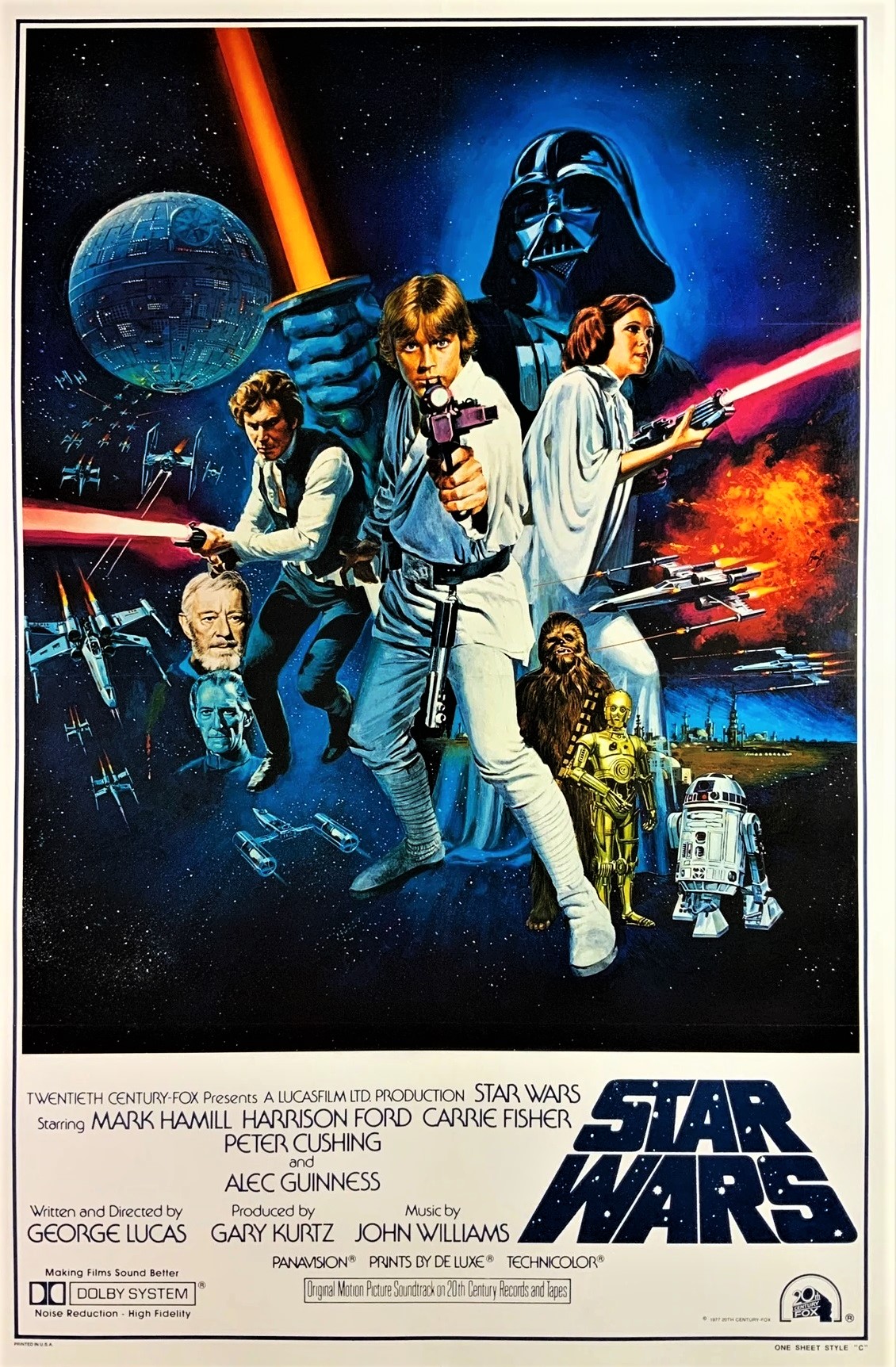
Happy Star Wars Day!


Happy Star Wars Day!

"May the Fourth be with you!"

I'm a "Star Wars" fan and think that's a lot of fun!

In honor of the day, let's hear the big hit version of "Star Wars Theme/Cantina Band" by Meco from 1977:


Still holds up, but was that really 45 years ago?

Saturday, January 15, 2022

"Jingle Bells" - Part 91 - Rockin'!


Staying in the country-tinged field with "Jingle Bells" but jumping ahead to 1970, we come across Bobby Helms!

He cut a version of "Jingle Bells" for Certron Records:


That was included on Bobby's "Jingle Bell Rock" album and it's probably obvious that I'm going to start talking about the title song!


Bobby Helms originally recorded the song for Decca Records in 1957:


That's a genuine classic! It's never been out of print or off the radio during the holiday season every year. There have also been a zillion other versions of the song in any genre imaginable.

It's almost as famous as "Jingle Bells" itself!

There's actually a whole conspiracy theory type story about "Jingle Bell Rock," so here's the short version...

The story goes that the song was originally called "Jingle Bell Hop" and it wasn't much of anything, but had made its way to a Bobby Helms recording session. Dissatisfied with the song, Bobby reworked it into its present form with ace session guitarist Hank Garland and the song was recorded. Such things apparently happened in the studio from time to time.

The song became an enormous hit but Bobby and Hank got no composer credit for it, as the song had already been published. Bobby was like "That's show biz!" about it, but Hank was resentful and made a squawk about it.


This and other issues caused Hank Garland to be on the outs with the big shots in the music industry (despite his brilliant playing), so they had someone shoot out one of the tires on Hank's car, leading to the horrific crash that ended Hank's professional career.

Is that all true? Who knows, but it's fascinating!

Back to that original record, it had a fun flipside:

Sixty-odd years later, most artists who were popular in 1957 are not known to current audiences, but Bobby Helms's voice is still heard every year!

As a bonus, let's listen to my favorite blending of "Jingle Bells" and "Jingle Bell Rock." It's by Randy Travis from 1992's "A Very Special Christmas 2":


That seems like 100 years ago to me!

Monday, December 27, 2021

"Jingle Bells" - Part 83 - Rosie!


Now that we're past the Christmas holiday (and Boxing Day) let's continue along with "Jingle Bells" and popular female vocalists with Rosemary Clooney and this wacky promotional item:


That's a laminated postcard that plays the jingle at 78 rpm!


I have one of these in my collection and it's tough to get it to play!

It's obviously from the mid-1950s, but is it from 1955 with the intention of looking forward to the newest model Ford or is it from 1956 with the intention of moving the current ones?

In any event, it's a lot of fun!

Rosemary Clooney wound up recording a "real" version of "Jingle Bells" in 1978 for her Christmas album on Misteltoe Records.

This was after she made a comeback following some tough years, but she's in good voice!

Of course, her most famous Christmas-related project was with her costarring role in the 1954 movie "White Christmas":

I'd say her best-known Christmas recording was "Suzy Snowflake" from 1951:


Suzy never reached the level of Rudolph or Frosty, but it's a cute song!

Like Patti Page, Rosemary Clooney started her career as a young vocalist while the Big Band Era was still going on and she first came to national fame with her sister Betty singing with Tony Pastor's band for a few years in the late 1940s.

She embarked on a solo career in 1949 and hit the bigtime with this novelty number from 1951:

I do need to point out that "Come On-A My House" was co-written by acclaimed novelist William Saroyan and his cousin Ross Bagdasarian, Ross being better-known as David Seville, creator of the Chipmunks!

It all comes back around!

Monday, December 6, 2021

1940s Christmas Playlist - Part 6 - "When You Trim Your Christmas Tree" (1946)


As we continue in 1946 with our playlist, we run across out first non-standard when we flip over Les Brown's record of "The Christmas Song" to find the so much more obscure "When You Trim Your Christmas Tree" featuring vocalist Jack Haskell:

I really like records like this where you have an obscure but good Christmas song done by an artist you like!

I think the standards are great and they've earned that distinction, but it's sometimes nice to hear a different song rather than a different version of a song that's been recorded hundreds of times.

This review from "Billboard" is interesting:

It's interesting to look back at a time when "The Christmas Song" hadn't hit pay-dirt yet and Doris Day was on more-or-less equal footing with Jack Haskell, Doris's last name being easier to spell not withstanding!

Jack Haskell had a pretty good career, appearing on TV a lot, but he couldn't compete with Doris Day - who could?

Jack still fared better than "When You Trim Your Christmas Tree," which went nowhere.

In fact, I can only unearth one other recording of the song, but at least it was by Bing Crosby!

It wasn't until 1971, on Bing's last full-length Christmas album, "A Time to Be Jolly" on Daybreak Records:


Bing sounds just fine (he never lost it), but that arrangement is so early 1970s! It reminds me of the soundtrack of a Rankin-Bass holiday special. (Too bad Bing never did one of those. Remind me to mention to to R-B when I go back in time for my "The Stingiest Man in Town" pitch!

The obvious question is why Bing would record a song that had gone nowhere 25 years earlier?

The answer is also obvious: the producer of the 1971 album was veteran arranger/songwriter Sonny Burke, whose composing credits include... "When You Trim Your Christmas Tree!"

Hey, it's a nice song, so why not include it on the album and get Sonny some royalties!

Oh, and the musical accompaniment on Bing's album was Les Brown, so now we're officially stuck in a loop between 1946 and 1971!

Popular (For Some Reason) Posts: