Showing posts with label Frances Langford. Show all posts

Wednesday, April 1, 2026

Word Association Wednesday: First Mood


As we move from Mood Indigo into Word Association Wednesday, my head is spinning a little - there are so many songs with “mood” in the title! But I’ve settled on a few favorites, and we’ll visit them over the next couple of days.

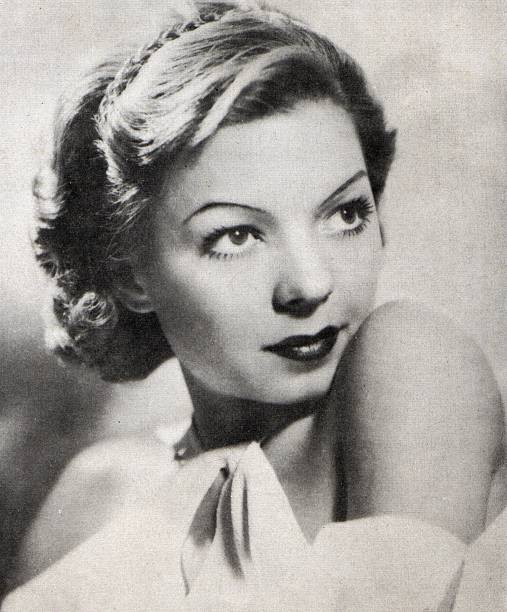
The Original: Frances Langford (1935)

Today we start with the great Jimmy McHugh/Dorothy Fields standard I’m in the Mood for Love, introduced in the 1935 Paramount picture Every Night at Eight. 

Frances Langford introduced the song in the film and recorded it for Brunswick.

Very Nice! Here is a clip of her from the movie:

It’s interesting that Frances got to sing the hit song and play George Raft’s love interest, especially with the higher-billed Alice Faye in the cast. But Hollywood had its own logic: Alice would soon become a major star at Fox, while Frances carved out a long, successful career on radio. 

The Satchmo Touch: Louis Armstrong (1935)

As a contrast, here’s a contemporary cover by Louis Armstrong on Decca:

Satchmo is absolutely the whole show here - trumpet solo, vocal, and a final trumpet solo - all riding over those vaguely Lombardo-esque saxophones!

The Evolution: James Moody (1949)

If we jump ahead to 1949, we find a very different use of a saxophone: an alto in the hands of James Moody. He recorded this brilliant improvisation in Sweden, which was issued in the U.S. on the Prestige label:

This version caused such a sensation that it earned its own nickname: “Moody’s Mood for Love.” It’s a great example of how a musician can find a completely new architecture within a familiar melody.


Which version puts you in the mood for love? Are you partial to the classic Langford vocal, Satchmo's trumpet, or the bebop brilliance of the Moody mood?


Friday, November 10, 2023

"Will I Ever Know" (1936) - Part 2!


As mentioned yesterday, Frances Langford did get the chance to record "Will I Ever Know" from Paramount's "Palm Springs" from 1936!

So, here's her Decca record with backing from Victor Young:


So nice!


Thursday, November 9, 2023

"Will I Ever Know" (1936)


I had mentioned earlier that Smith Ballew's good looks led the singer to a movie career, so here we have him co-starred with fellow singer Frances Langford in Paramount's "Palm Springs" from 1936!

Nice looking couple!

Frances sang the song "Will I Ever Know" in the movie and did record the song, but let's listen to Tommy Dorsey's Victor recording with vocalist Edythe Wright:


I really like Edythe Wright!


Friday, October 13, 2023

"Love Never Went to College" (1939)


Still in 1939, we have what I believe is our first college song from a Broadway show!

The song in question is "Love Never Went to College" from the Rodgers & Hart musical "Too Many Girls."


At this point in time, original cast albums still weren't a thing, but one of the stars of the show, Mary Jane Walsh, recorded a few of the songs for Columbia Records.

So, here's Mary Jane with "Love Never Went to College":


That's really nice. I'm so used to hearing dance band versions of 1930s show tunes that something like that is a pleasant change. (I'll talk more about that in a couple pf minutes!)


But I still love me some dance bands, so here's Paula Kelly singing "Love Never Went to College" with Al Donahue's band on Vocalion Records:


I really like Paula Kelly's singing a lot. Her handful of records with Glenn Miller are great!

Let's hear one more version, this time it's Hal Kemp with The Smoothies on Victor:


A fun version showing how the Kemp band was evolving with the times.

And one more version, this one by Benny Goodman with Louise Tobin on Columbia:

The most popular and enduring song from the show "Too Many Girls" was by far "I Didn't Know What Time It Was," so let's flip over BG's record for his version of that standard, again with Louise Tobin on the vocal:


Sounds great!


Louise Tobin is another underrated vocalist of the era, usually only being mentioned as Harry James's pre-Betty Grable first wife, but she passed away only about a year ago at age 104, so maybe she had the last laugh!

Benny Goodman had recently switched to Columbia label after a monumental run with Victor and the word is that part of the reason is that he felt Victor was favoring newcomer rival clarinetist/bandleader  Artie Shaw!


Whatever the case, here's Artie's version of "I Didn't Know What Time It Was" with vocalist Helen Forrest on the Victor subsidiary Bluebird:


More talk is that the tempo is too fast for this number causing Helen to rush through the heartfelt lyrics, and I agree, but I still like it!

Not underrated as a band vocalist and deserving of every plaudit she got, Helen Forrest was always great, but she really hit her stride after her stints with Artie's and Benny Goodman's bands when Harry James's band provided arrangements that better showcased her.


Let's keep things going and hit the movie version of "Too Many Girls" from RKO in 1940!


The movie included "You're Nearer," a Rodgers & Hart song not from the show, which was performed by Frances Langford, who took on Mary Jane Walsh's role from the show.

Here's Frances's recording of "You're Nearer" for Decca:


Talking about tempos, the rare solo vocal star of the era like Frances Langford didn't have to worry about a bandleader keeping a dance tempo!


The film version of "Too Many Girls" casts a very long shadow over pop culture as it was on the set of that movie that Lucille Ball and Desi Arnaz met!

The mind-boggling thing is that if that movie hadn't been made, maybe Lucy and Desi wouldn't have met and "I Love Lucy" may not have happened, which would mean the whole landscape of TV would have changed!


Thursday, October 5, 2023

"You Hit the Spot" (1936)


It's now 1936 and Paramount has another college picture: "Collegiate" with Joe Penner and Jack Oakie back again!

In addition to those holdovers from 1934's "College Rhythm," "Collegiate" features lovely singing star Frances Langford!

Frances sang the hit "You Hit the Spot" in the movie and recorded it for Decca Records:


A popular version was also recorded by Richard Himber and his Ritz-Carlton Orchestra with vocalist Stuart Allen on Victor Records:


Kind of snappy, but even snappier is this version by Kay Thompson on Brunswick Records:

That's pretty cool, but who are The Boys?


Wednesday, June 1, 2022

Bonus 78s - Varsity Show!


Hey, let's listen to some 78s of the songs from 1937's Warner Bothers feature "Varsity Show!"

As I mentioned last time, "Varsity Show" has about 40 minutes missing from the original release, so not all of the songs are in the surviving print as they originally presented, but Decca Records recorded them all.


Leading man Dick Powell was the only featured cast member to have a recording contract at the time and he recorded four of the Johnny Mercer/Richard Whiting songs for Decca with backing from Lou Forbes.

Here's the most popular song from the movie, "Have You Got Any Castles, Baby?":


I'm guessing that Dick Powell sang that in the movie, but as it stands, we only hear it in a reprise from Priscilla Lane then Buck & Bubbles in the finale.

The flipside is "Moonlight on the Campus," which I don't think appears in the current print:


We do see Dick Powell sing "You've Got Something There" as a duet with Rosemary Lane, but he cut it solo for Decca:


The flipside of that record is "Love is on the Air Tonight," which is another song that is only in the finale:


I'm very partial to songs like that which are rich in period flavor. It's about radio (as opposed to TV) and namedrops Bing Crosby and Rudy Vallee (and Jell-O!), which is really fun!

Fred Waring was on his self-imposed hiatus from recording in 1937 - he felt that records would compete with his radio and personal appearances - so other artists needed to fill the gap to record the other songs from "Varsity Show."


Another Mercer/Whiting song is "On With the Dance," which is first sung by Rosemary Lane in the movie, then it pops up in the finale. Decca had Will Osborne and his Orchestra record it:


Interesting that the label says the vocal is by Dorothy Rogers and chorus, but it's really more of a duet between Dorothy and Will Osborne (with chorus)!


Decca also released an unusual version of "On With the Dance" by stringed instrument virtuoso Roy Smeck and his Serenaders with vocalist Donald King:


It's different but I like it!

Frances Langford channels her inner Roy Smeck!

The song "Little Fraternity Pin" (written by Roy Ringwald and Paul Gibbons) is listed in the opening credits, but does not appear in the shortened version of "Varsity Show." Decca had Frances Langford recorded this lovely version with The Foursome and backing from Phil Ohman:


The Foursome was led by future Spike Jones cohort Del Porter and we had previously head them singing "Jingle Bells" with Dick Powell!


Pricilla Lane sings "I'm Dependable" with Fred Waring (the sing was co-written by Fred's brother Tom) in the movie and Decca had Ben Pollack and his band record it with vocalist Frances Hunt:


Drummer/leader Ben Pollack always had solid bands!


The swingiest number from "Varsity Show" was "Old King Cole" by Johnny Mercer and Richard Whiting and it was sung twice(!) by Johnny "Scat" Davis. Johnny wasn't making records at that time, so Decca assigned it to pianist Edgar Hayes and his band:


Pretty snappy! I believe the uncredited vocal is by trombonist Clyde Bernhardt.


And to show that Decca Records really went to town, here's four songs from "Varsity Show" on a two-sided record from pianist Franke Carle (moonlighting from Horace Heidt):


So, lots of 1930s fun in some different styles!

Thanks, Decca!


Saturday, October 9, 2021

"Jingle Bells" - Part 57 - Organ-ic!

Remaining in the 1960s with "Jingle Bells," we have versions by three popular organists!


First up is Jimmy McGriff with this track from his 1963 "Christmas with McGriff" album on Sue Records:


Very cool and definitely a memorable album cover!

The title track was edited for a two-sided single:


Jimmy had first attracted national attention with his great version of the Ray Charles tune "I've Got a Woman," released on Sue Records in 1962:


Good stuff!


A little more pop-oriented is this 1965 version of "Jingle Bells" by Earl Grant from his "Winter Wonderland" on Decca Records:


Very solid! What's that beat?

The flipside features Earl crooning "Silver Bells":


That single (as well as the album) was popular for a long time.

As evidenced, in addition to his keyboard prowess, Earl Grant was a talented vocalist of the Nat King Cole school. This really shows up in his big 1958 hit single "The End" on Decca Records:


A great track that belongs on your 1958 playlist!


Another LP from 1965 was Eddie Dunstedter's "Christmas Candy" on Capitol Records, which featuted this Bossa Nova take:


That's really fun!

Here's the title track from the album:


Eddie Dunstedter recorded a few Christmas albums and they still sound great today!


Eddie had a long career and was a professional long before Jimmy McGriff and Earl Grant were even born!

We had heard Eddie backing singer Kenny Baker on a couple of Christmas Carols from 1938 here, so let's hear him do the same for Frances Langford, also from 1938 on Decca Records:


Still sounds good!

So, organists with different styles but all masters of the instrument!

Monday, May 17, 2021

1936: Records


We're going to hang around 1936 just a little longer to listen to some of my favorite records from that year!

Again, not necessarily the best, but here are ten that I like a lot.

So, in alphabetical order by artist, here are both sides of each 78 rpm record...

Fred Astaire's movies with Ginger Rogers always had great scores by great songwriters and Jerome Kern and Dorothy Fields delivered the goods for "Swing Time":


Love Fred's tap-dancing on Side Two!


The Boswell Sisters were outstanding purveyors of close harmony. This single was one of their last before the act broke up and Connee Boswell pursued a successful solo career:

Fun take on the ubiquitous "The Music Goes 'Round and Around!"

Here's an interesting 12-inch record to promote the Bing Crosby picture "Pennies from Heaven." Side One features Frances Langford and Louis Armstrong (who was featured in the movie) in addition to Bing singing the title song, backed by Jimmy Dorsey's band. Side Two has those same artists with a medley of songs from the movie:

A lot of talent there! And dig Jimmy's alto sax chorus on the title tune!

Tommy Dorsey vocalist Edythe Wright "borrows" Dave Tough's drum kit!

Jimmy's brother Tommy Dorsey had split from the Dorsey Brothers Orchestra the year before and was now leading his own band. He had a small group within the band, the Clambake Seven, to play Dixieland-inspired music. They always sound like they're having a blast! Here's one of those records, featuring vocalist Edythe (misspelled on the label) Wright:

Love, love, love "At the Codfish Ball" especially, with tenor saxist Bud Freeman and drummer Dave Tough in top form!

Duke Ellington poses with his band including Barney Bigard (middle left) and Cootie Williams (top left).


For my money, Duke Ellington may have been the greatest musical talent of the twentieth century! He certainly was a brilliant composer and arranger with a great band of top musicians. This record features showcases for trumpeter Cootie Williams and clarinetist Barney Bigard respectively:


Cootie used "Echoes of Harlem" as his theme song when he formed his own band in the 1940s.

Like Tommy Dorsey, Benny Goodman also featured small groups in addition to his full band. In 1936, he had the Benny Goodman Quartet, which also featured star drummer Gene Krupa from the band and pianist Teddy Wilson and vibraphonist Lionel Hampton. I can't think of any other group ever that featured such talent. Four absolute masters of their instruments. Here's a great record from them:


Will Hudson's "Moon Glow" has been recorded a zillion times, but never better!

We turn to the sweeter side with Hal Kemp's orchestra. The group had a staccato approach and I think it's a great sound and singer Skinny (later Skinnay) Ennis is perfect with the group. Skinnay takes the vocal on the first of two numbers from "Golddiggers of 1937":

Skinnay on Side One and the more conventional Bob Allen on Side Two make an interesting contrast.

Leader Andy Kirk (left) and vocalist Pha Terrell go over an arrangement with pianist Mary Lou Williams.
 

Andy Kirk had a great band that featured variations on "Clouds of Joy" as its name. He alternated ballads sung by Pha Terrell, such as this huge hit here on the A-side, with instrumentals often arranged and/or composed by the ultra-talented pianist Mary Lou Williams, such as the flipside here:


It seems that a lot of modern listeners think that ballads with vocals like "Until the Real Thing Comes Along" were necessary evils faced by swinging bands like Andy Kirk's.

But those records are part of the fabric of popular music at the time and fans liked them!

Whatever the case, this was an underrated band, I think.

Not underrated by aficionados is the tremendous band led by Jimmie Lunceford. Their not-so-secret weapon was arranging genius Sy Oliver, one of the best. This was a big hit for them:


"Organ Grinder's Swing" was another number composed by Will Hudson, who was co-leading the Hudson-DeLange Orchestra with lyricist/singer Eddie DeLange at the time.

Here's a nice early record by the Sons of the Pioneers while Roy Rogers (far right above) was still in the group. It's a couple of songs from the movie "Rhythm on the Range," in which the group appeared:


Fun take on "I'm an Old Cowhand!"

If pressed, I'd say that Benny Goodman probably had the best year on records, but Tommy Dorsey overtook him the next year.

As a bonus, here's a 1936 record from Victor featuring the full bands of Benny Goodman and Tommy Dorsey, each with their respective take on "Star Dust":

Two great sides there! Hoagy Carmichael's tune was already a standard by then!


And for a bonus bonus, since "The Music Goes 'Round and Around" is stuck in my head, let's embrace it and listen to Mike Riley (spelled incorrectly on the label) and Eddie Farley's original hit (and its flipside) with their Onyx Club Boys:

This record was released in 1935, but was very popular in 1936!

Plenty of other great records were released in 1936, but hopefully you enjoyed these!

Popular (For Some Reason) Posts: